Children and Tampons
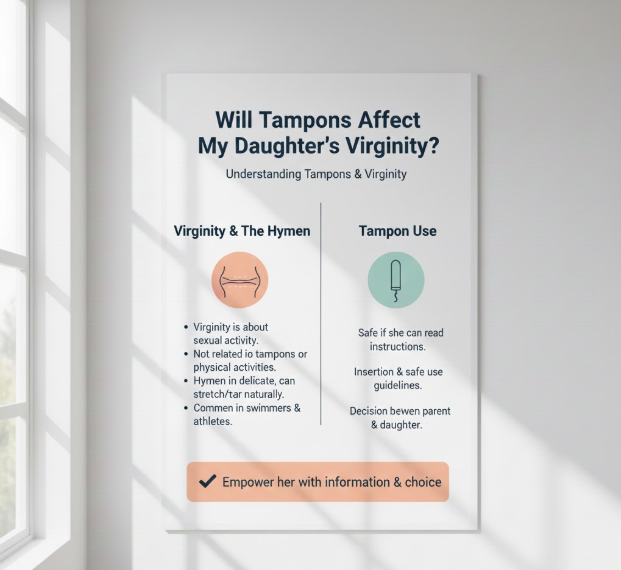
Will tampons affect my daughter’s virginity?
Virginity has to do with sexual activity—not with using tampons or doing splits. Many young girls start using tampons early, especially if they swim or play sports.
The hymen, which partially covers and protects the opening to the vagina, is so fragile that it is stretched or torn during many activities. There is no reason why your daughter couldn’t use a tampon if she can read and understand the instructions for insertion and safe use.
Ultimately, the decision is yours and hers.
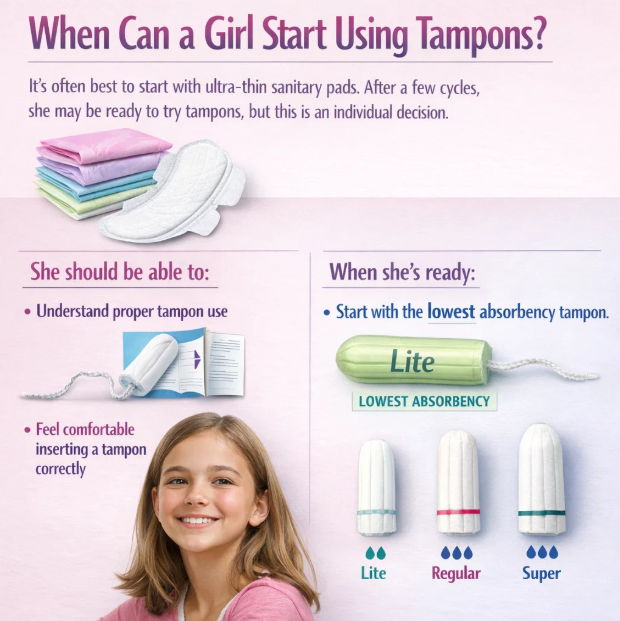
when can a girl start using tampons?
It’s often best to start with ultra-thin sanitary pads. After a few cycles, she may be ready to try tampons, but this is an individual decision.
She should be able to understand proper tampon use and feel comfortable inserting a tampon correctly. When she’s ready, we suggest starting with the lowest absorbency tampon.
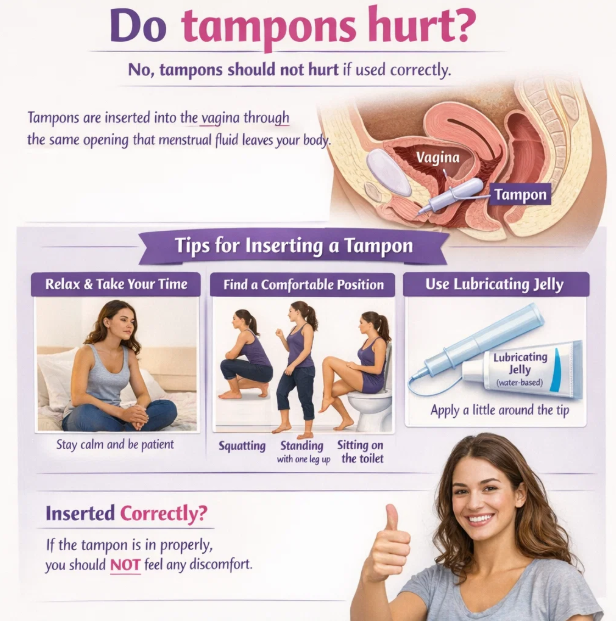
Do tampons hurt?
No. When used correctly, tampons should not hurt.
Tampons are inserted into the vagina through the same opening where menstrual fluid leaves the body. In most cases, this opening is large enough to accommodate a tampon. If you carefully follow the tampon insertion instructions inside the packaging, you’ll usually find that using tampons is quite easy. The package leaflet also shows several positions that can help you insert a tampon comfortably.
While learning, it helps to relax, take your time, and be patient. Some beginners need to try a few times before they can insert a tampon comfortably. If you’re having difficulty, a small amount of water-based lubricating jelly (not petroleum jelly) on and around the tip of the tampon—or the applicator tube, if you’re using one—may help make insertion easier.
When a tampon is inserted correctly, you should not feel discomfort.
My 10-year-old gets stomach aches. is it puberty?
Has your daughter shown any signs of puberty, such as breast development, underarm hair, pubic hair, or a white vaginal discharge? Has she had a recent growth spurt or gained weight? These signs can be more reliable indicators of puberty than stomach cramps alone.
Because stomach aches can have many causes, it’s a good idea to bring her to her doctor for an exam and a professional opinion.
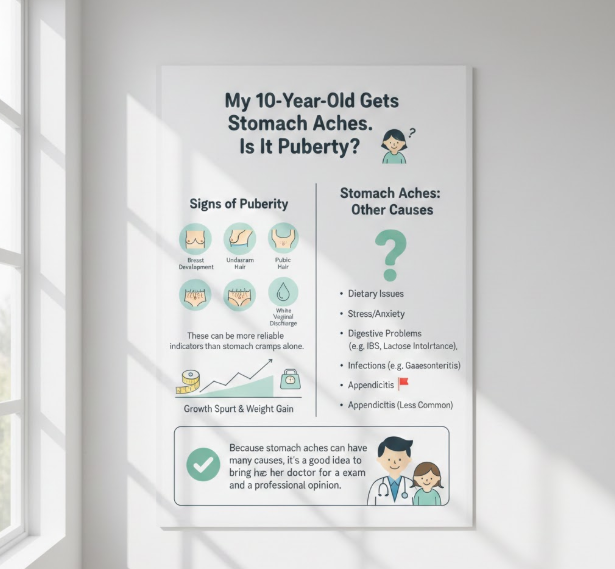
My 10-year-old gets stomach aches. Is it puberty?
Has your daughter shown any signs of puberty, such as breast development, underarm hair, pubic hair, or a white vaginal discharge? Has she had a recent growth spurt or gained weight? These signs can be more reliable indicators of puberty than stomach cramps alone.
Because stomach aches can have many causes, it’s a good idea to bring her to her doctor for an exam and a professional opinion.
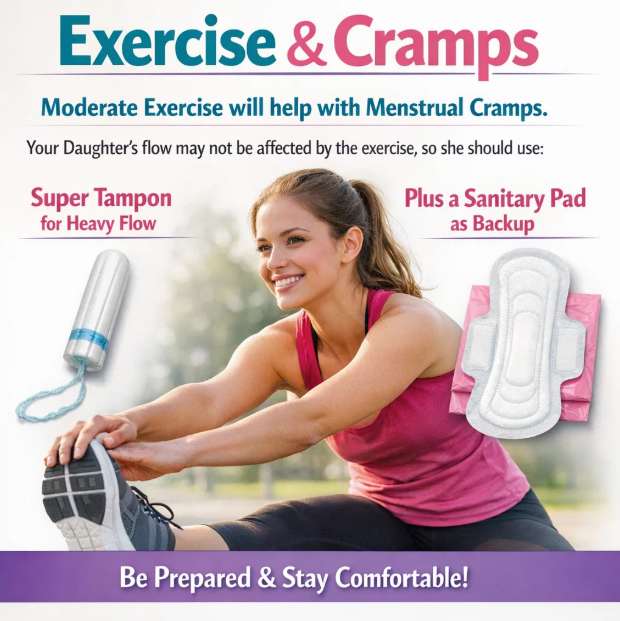
Exercise and cramps
Moderate exercise can help relieve menstrual cramps. Your daughter’s flow may not change with exercise, so she should use whichever menstrual product feels most comfortable and provides enough protection for her flow.
If she has a heavier flow, she may prefer a higher-absorbency option, and some people like to use a pad or liner as backup for extra peace of mind.
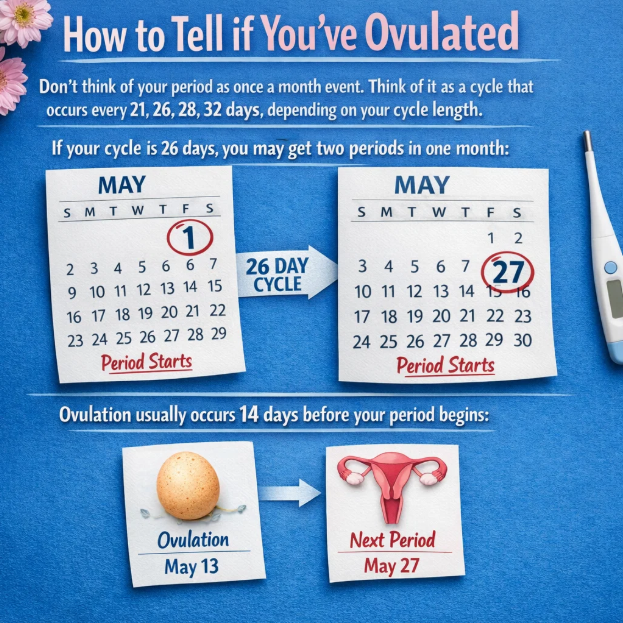
How to tell if you’ve ovulated
Don’t think of your period as a once-a-month event. Think of it as part of a cycle that may occur every 21, 26, 28, 32 days—or whatever number of days your cycle lasts. If your cycle is shorter than 30–31 days, you may have two periods in one calendar month. For example, if you have a 26-day cycle, you could get your period on May 1 and then again on May 27. With an even shorter cycle, two periods in one month are even more likely.
Usually, ovulation happens about 14 days before your next period starts.
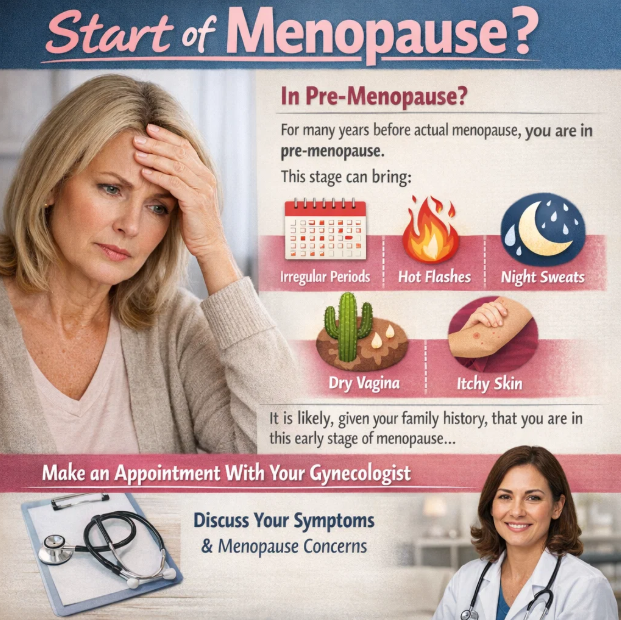
Start of menopause?
For many years before menopause, you may go through a stage often called perimenopause (sometimes referred to as “pre-menopause”). This time is commonly marked by symptoms such as irregular periods, hot flashes, night sweats, itchy skin, vaginal dryness, and other changes.
It’s possible—especially depending on your age and family history—that you may be in an early stage of this transition. Menopause itself is defined as your final menstrual period, confirmed after you’ve gone 12 months without a period.
Make an appointment with your gynecologist and discuss your symptoms and concerns with them.